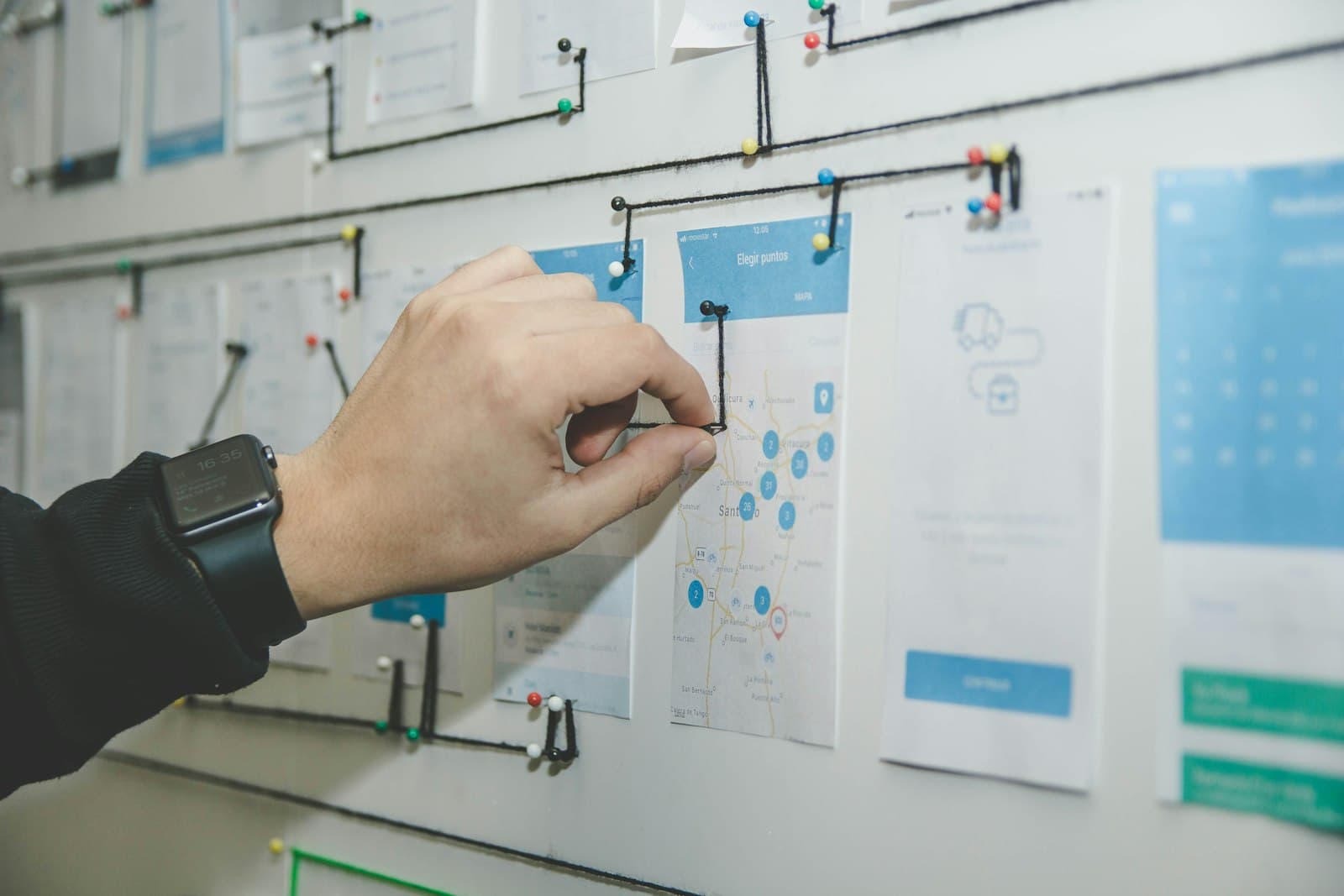
SaaS & subscription products
Onboarding, billing, feature flags, and multi-tenancy, built from day one so subscriptions and user growth scale cleanly.

SaaS, dashboards, marketplaces, and internal tools, with a codebase that scales with your product.
Overview
Digital products need architecture, not just pretty surfaces.
MVP
SaaS
API
Web applications are digital products with real logic: accounts, data, workflows, billing, integrations. Whether SaaS startup, internal automation tool, or marketplace, the difference from a website is depth and scalability.
I build web apps with Next.js, React, and TypeScript, plus APIs, databases, and cloud services as needed. Focus: an MVP that goes live fast and architecture that grows with you.
No one-off solution that needs a rebuild after six months. Clear modules, clean interfaces, and iterative delivery, with regular releases instead of a monolithic big bang.
Whether Stripe subscriptions, role-based dashboards, file uploads with analysis, or webhook-driven workflows: I combine proven services with tailored logic: performant, maintainable, and documented.
Security, monitoring, and deployment are planned from the start, not when the first paying customer goes live. That keeps your product manageable under load and as requirements grow.
On an intro call we clarify product vision, technical requirements, and a sensible first release, transparent with fixed price or day rate.
“A good product solves a real problem. The tech just shouldn't get in the way.”
Use cases
From SaaS MVP to production platform.
Onboarding, billing, feature flags, and multi-tenancy, built from day one so subscriptions and user growth scale cleanly.
Replace manual processes with digital workflows, with clear rules, traceability, and interfaces your team actually uses.
Two- or multi-sided models with profiles, listings, matching, and transaction logic, structured instead of feature sprawl.
PDF analysis, classification, or assistants, embedded in real product flows where they deliver measurable value.

Web apps live on a clear data model, clean APIs, and traceable workflows. Whether user onboarding, payment flow, or admin reporting, every feature needs a solid foundation so extensions don't become a rewrite.
I use modular Next.js architecture, typed APIs, and relational databases with clear migrations. Auth, billing, background jobs, and third-party integrations are planned as solid building blocks, not bolted on later.
The MVP focus stays: go live fast, get real feedback, then iterate. That avoids months of development without market validation and builds a codebase that grows with your product.
Deliverables
From prototype to production platform.
Multi-tenant architecture, billing, onboarding, and feature flags, planned from the start.
Data visualization, filters, exports, and management interfaces for your team.
Two- or multi-sided models with profiles, listings, and transaction logic.
Internal tools that replace manual processes, with clear rules and traceability.
REST, GraphQL, webhooks, and third-party connections, robust and documented.
PDF analysis, chat assistants, or classification, where it adds real value.
Process
Three steps from first call to shipped result, transparent and without agency overhead.
With a clear MVP: the smallest version that delivers real value to real users. We build iteratively from there.
Depending on the project PostgreSQL with Prisma, Supabase, or similar, always with migrations and a clear data model.
Yes. Code, deployment, and documentation are handed over so your team or another developer can take over seamlessly.
Gladly. Bug fixes, features, and scaling can be agreed as retainer or project-based.
Depends on scope, integrations, and logic complexity. A focused MVP is significantly cheaper than a full version with all modules. After the intro call you'll get a transparent quote.
Typically a few weeks to a few months, depending on scope, integrations, and design depth. We define the smallest sensible release together and iterate from there.

A short product description is enough, and I'll reply with a technical proposal and realistic timeline.